
AmeriPro Environmental ServicesMODULAR INFRASTRUCTURE / CONCEPT DEVELOPMENT
FLOOD RESPONSE TEAM · REV A / NOVEMBER 2026

Pump.
Dry.
Restore.

Two purpose-built trailer concepts. One coordinated response, from standing-water removal to controlled structural drying.

Plan a response
Proposed equipment · Engineering validation pending
01 / MFP-500Remove bulk water
02 / DRYFORCEControl the drying environment
03 / RESTORATION HANDOFFVerify moisture conditions
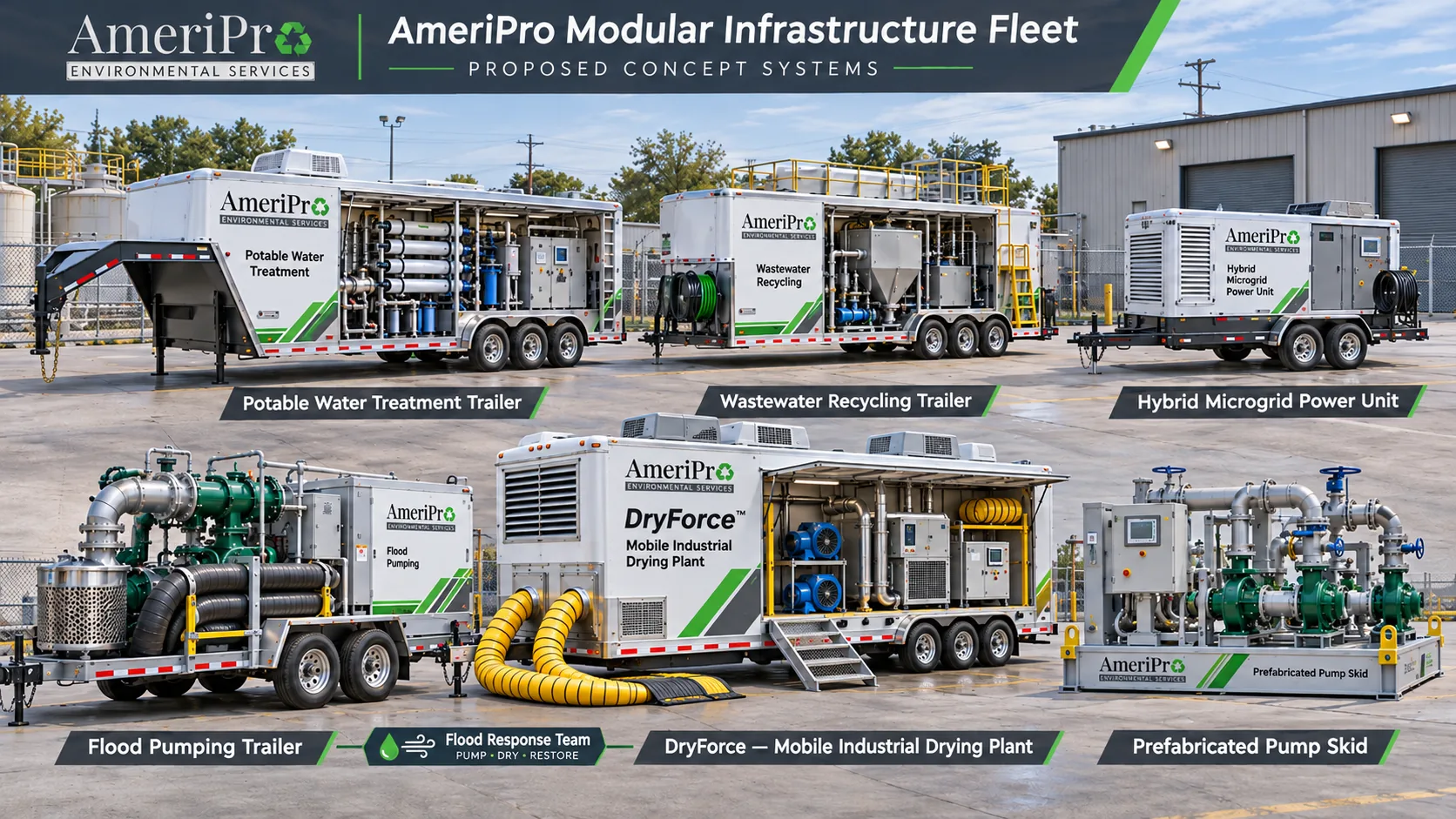
Proposed AmeriPro modular fleet: potable water treatment, wastewater recycling, hybrid microgrid, flood pumping trailer, DryForce drying plant and prefabricated pump skid.
The modular infrastructure fleet. The flood pumping trailer and DryForce form the Flood Response Team.
REV B / EQUIPMENT ARRANGEMENTS

Explore the equipment arrangements.

Interactive trailer zoning, component details, loaded mass allocations and a DryForce power study.

Open design studio →
NEW / REV C DEPLOYMENT & CONTROLS

Connect the response.

Site arrangement, proposed connection schedule and a controls-response review for the two-trailer team.

Explore deployment →
A COORDINATED PAIR

One team. Two distinct jobs.

500 GPM is the planning starting point; the final rating follows pump selection.

01 / MOBILE FLOOD PUMPING STATION

MFP-500

High-volume water removal with a serviceable pump package, screened intake, hose storage and local controls.

  • Debris screening and intake access
  • Dry-run protection and level-based control concept
  • Pressure / vacuum indication and optional telemetry
  • Contained leaks and accessible service points

Discharge destination and water classification must be resolved for each site. Bulk pumping does not treat the water.

02 / MOBILE INDUSTRIAL DRYING PLANT

DryForce

Ducted dehumidification and distributed air movement, with moisture records to support the restoration handoff.

  • Dehumidifier technology selected after load study
  • Supply / return ducts with measured airflow
  • Temperature, humidity and material-moisture records
  • Condensate or desiccant regeneration exhaust management

No drying time, remediation outcome, trailer size, power rating or towing classification is certified at this stage.

Fleet connection

MWTP-50, MWTP-50C and MWTP-250 remain separate water-treatment systems. No connection from floodwater to a potable-water system is proposed here.

Explore water treatment →
INTERACTIVE / SCENARIO ESTIMATE

Size the mission.

Explore the effect of volume, inflow and effective drying capacity. These are simplified planning calculations, not field operating instructions.

Bulk water removal
Residual moisture removal

Enter an effective site rate, not a catalog maximum. Moisture burden is an independent assumption; it is not calculated from flood depth. Drying slows as materials approach equilibrium.

PLANNING OUTPUT
Initial standing water—
Net removal after inflow—
Estimated bulk pumping time—
Idealized moisture removal time—

Calculation basis and limits

Standing water = area × depth ÷ 12 × 7.48052 US gallons/ft³. Average net removal = duty-point flow × effective-time fraction − continuing inflow. Pump time = initial gallons ÷ net GPM ÷ 60. Idealized drying days = moisture gallons ÷ (effective gallons/day/module × module count).

Pump flow must come from a selected pump curve at the actual total dynamic head, with suction conditions, hose losses and solids considered. The model does not calculate head, NPSH, evaporation, psychrometrics, electrical load or a material-specific dry standard. The two durations are not added: work may be staged or overlap only where site conditions allow. Measured moisture conditions govern completion.

COMMERCIAL / PLANNING ALLOWANCES

Test the business case.

Editable planning costs and pricing, to be replaced with supplier quotes.

Capital and utilization assumptions
UNLEVERED SCENARIO
Annual gross revenue—
Annual operating surplus—
Operating break-even utilization—
Simple capital payback—

Operating surplus = (daily revenue − daily variable cost) × billable days − annual fixed costs. Payback excludes financing, taxes, depreciation, residual value and replacement capital. Mobilization, disposal, labor, fuel and insurance must be allocated explicitly before quoting jobs.

ENGINEERING / NEXT DESIGN GATE

From concept to a build decision.

Jeff Ricks · AmeriPro concept development

01

Design basis & layouts

System boundaries, component tags, preliminary zoning and vendor selection requirements.

Read concept design →
02

Preliminary BOM & costs

Separate pump and drying allowances, contingency, exclusions and a quote checklist.

Read preliminary BOM →
03

Validate the pair

Select duty point and drying load, obtain vendor data, close weight and power budgets, then test the assembled units.

View validation gates →